
Community, Compassion, and Commitment are Transforming Local Approaches to Food Security
By Jose German-Gomez
In the struggle against hunger and food insecurity, there exists an organization whose dedication gives hope to many. The Northeast Earth Coalition (NEEC), widely recognized for its environmental advocacy, has, since 2020, expanded its mission to confront one of the most pervasive challenges facing our communities: the lack of access to nutritious food.
From Environmental Stewardship to Humanitarian Action
The NEEC’s foray into food security has been a natural extension of its longstanding commitment to sustainability, equity, and community empowerment. For years, NEEC has championed environmental justice and ecological restoration, inspiring countless people to become stewards of the earth. Yet, as COVID-19 cast its shadow across our neighborhoods, exacerbating the vulnerabilities of many, the Coalition recognized a new imperative: to feed those struggling in silence.
Building the Community Food Network
In October 2020, NEEC launched its Community Food Network, a collaborative endeavor that has become a lifeline for hundreds. What sets this initiative apart is the nature of its operation: grassroots action depending on volunteers and the generosity of neighbors.
The Network has grown in partnership with twelve churches and two synagogues; a tapestry of faith-based organizations united in purpose. Across five local towns, these partners opened their hearts, providing food access around the clock—24 hours a day, seven days a week, through a network of publicly accessible Free Little Pantries. These pantries operate along the lines of free little libraries, except that people contribute food rather than books.
Impressive Impact: Numbers that Speak Volumes
Since its inception, the Community Food Network has distributed over 1.5 million pounds of canned and dry goods, helping to nourish those facing hardship. This figure captures only a fraction of the program’s true value, for each meal represents not just sustenance, but a gesture of compassion and solidarity.
What makes NEEC’s approach remarkable is that the program is unfunded by any public sources. Instead, it relies entirely on the goodwill of individuals—neighbors helping neighbors. There are no government grants or corporate donations; there is simply the quiet, everyday heroism of people willing to share what they have with those who need it most. DONATE HERE
The Heartbeat of the Network: Volunteers
At the core of this operation is a dedicated army of volunteers. These heroes devote their energy, and love to the cause. From the careful monitoring of the 18 Free Little Pantry locations, ensuring that shelves are stocked and accessible 24/7—to the nurturing of community gardens, their commitment never falters.
Each pantry is a beacon on its block, a place where anyone can take what they need or give what they can. Volunteers oversee these sites day and night, replenishing supplies and asking nothing in return but the opportunity to serve.
Growing With Love: Community Gardens
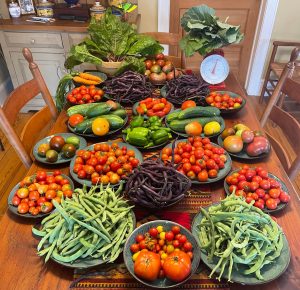 Complementing the food pantries is a network of four community gardens, each part of a patchwork of green hope. Not just sources of organic produce, these gardens are classrooms where knowledge is sown alongside seeds, sanctuaries where neighbors exchange stories and support.
Collectively, the gardens yield an average of 8,000 to 10,000 pounds of fresh vegetables annually. Every tomato, carrot, and squash is cultivated with care, destined to nourish local food programs and families in need. Volunteers gather three days a week to plant, weed, harvest, and distribute the bounty, embodying the mantra, “We grow with love.”
This phrase is not an empty slogan. It is a living truth, reflected in the sweat on brows and the smiles exchanged over baskets of produce. The passion of these gardeners is palpable; their dedication is transformative. Their efforts bridge the gap between abundance and scarcity, reminding us that food is not merely a commodity, but a gift to be shared.
Neighbors Helping Neighbors: A Model of Mutual Aid
The NEEC’s Community Food Network is rooted in the principle of mutual aid. It rejects the notion of charity as a one-way street, embracing instead a cycle of giving in which everyone, at some point, is both helper and helped. The program is sustained by individual donations—bags of rice, cans of soup—each contribution reinforcing the idea that we are, indeed, our brothers’ and sisters’ keepers. 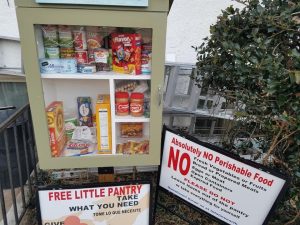
The impact of this approach ripples outward. It strengthens social ties, counteracts isolation, and builds resilience. It shows that solutions to complex problems need not be distant or bureaucratic; they can spring from the soil of community and flourish in the care of everyday people.
Challenges & Triumphs
Running a program of this magnitude without public funding is not without difficulties. Volunteers must coordinate logistics, manage inventories, and respond to fluctuating demands, especially during holidays, economic downturns, and unexpected crises. Yet, time and again, the community has risen to meet these challenges.
Churches and synagogues have become centers of hope, places where individuals can both seek and offer support. The gardens have become living laboratories, where sustainable practices are evaluated and shared. The pantries are symbols of dignity, where no one is turned away and every gift is honored. DONATE HERE
The Unseen Difference
What distinguishes the NEEC’s work is not only its scale, but its spirit. Whether sorting donations or turning compost, volunteers see themselves as part of a larger story—one in which compassion overrides indifference and generosity eclipses scarcity.
Their passion is infectious. It motivates others to join, to give, to learn. It transforms strangers into neighbors and neighborhoods into communities. The difference made by the NEEC and its partners is, in many ways, invisible: it is felt in the warmth of a meal, the relief of a parent, the hope of a child.
Looking Ahead
As the NEEC continues its fight against hunger and food insecurity, its example offers lessons for other communities. It reminds us that food justice is inseparable from environmental stewardship, and that solutions must be as local as they are inclusive. The organization’s refusal to rely on public funding is a statement of trust—in people, in neighborhoods, in the power of collective action.
In a world often fractured by division and scarcity, the Northeast Earth Coalition stands as an example of possibility. It shows us that, with enough will and enough heart, we can ensure that no one goes hungry. We can nurture both land and lives, growing not only vegetables, but hope and solidarity.
In the end, the NEEC’s greatest harvest is not measured in pounds, but in connections—neighbors helping neighbors, guided by the belief that, together, we can make a lasting difference. For additional information about the NEEC, please contact them at: Info@neearth.org