
By Bridget Daley,
Rutgers Environmental Steward and Madison Environmental Commission Member
Hooray for warmer weather! We’re all excited to get outside and into our yards and gardens. But please don’t spring into the same old “spring cleanup” routine!
Do more by doing less: leave the leaves.
Why? There’s life in those leaves!
Pollinators use fallen leaves year-round, for shelter and food. For example:
- At the end of summer, bumble bee queens burrow just below the soil to wait out winter. The leaves give them extra protection—like a blanket.
- Many butterflies and moths overwinter as a chrysalis or cocoon disguised as dried leaves—including black swallowtails and tiger swallowtails.
- From May through October, the red-banded hairstreak butterfly lays its eggs on fallen oak tree leaves—which become the first food for its hungry caterpillars when they hatch!
Also, butterflies and moths are not just pollinators. Their caterpillars are vital “baby food” for birds—because they’re squishy, protein-rich, and mama or papa birds can stuff them down babies’ throats. Just one pair of breeding chickadees needs 6,000 to 9,000 caterpillars to feed a single brood of young.
Birds also flip leaves in search of food throughout the year—including insects that seek shelter under the security of leaves, as well as acorns and other seeds and nuts. Remove the leaves, and you’re removing all that necessary bird food.
The “50 degrees rule” is an urban legend.
Popular belief is that all insects will emerge from the fallen leaves after a certain number of days above 50 degrees. So well-intentioned folks start removing leaves at that point in spring. But please don’t!
Entomologist Doug Tallamy explains, “Species of moths, butterflies, bees, beetles, etc. emerge all season long; some in the spring, others in the summer, and others still in the fall.” That’s because “the food their larvae require isn’t ready all at the same time.”
For example, certain miner bees are ground-nesting pollen specialists that gather pollen only from plants that bloom in late summer and early fall, like goldenrod and asters. And an eastern firefly spends one to two years as a larva in moist leaf litter, which it needs year-round. They emerge as adult lightning bugs in June or July.
It’s easy to leave the leaves in garden beds, under trees, shrubs and perennial plants—where they’ll provide greater benefits than expensive wood mulch. It is the most natural process, and they’re free (and beautiful)! They retain soil moisture, nourish the soil, feed your trees and plants, insulate roots from extreme temperatures, suppress weeds, and control erosion.
Let’s clear the air about leaf blowers.
With hurricane-force winds of 150 to 200+ miles per hour, all leaf blowers damage natural habitat. They also stir up harmful dust into the air we breathe—like pollen, mold, animal feces, heavy metals, and chemicals from herbicides and pesticides.
But gas-powered leaf blowers are much worse. They pose multiple, proven health hazards, due to their antiquated two-stroke engines, fueled by a mix of gasoline and oil. The excessive noise they produce is not only stressful, it’s so loud that it can cause irreparable hearing loss, tinnitus, and other adverse health effects. And the toxins they release into the air―carbon monoxide, formaldehyde, benzene, nitrogen oxides, hydrocarbons, particulate matter—impact respiratory health; increase asthma risk and severity; and are associated with numerous health outcomes, including cancer, heart disease, and dementia.
Love the leaves.
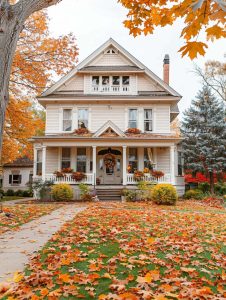 We each have the power to make our own yard—and our community—a healthier, more beautiful place. It starts with a simple shift in mindset, then taking an easy action step that makes a big difference.
It’s wonderful to see that more and more residents are carefully leaving the leaves in their yards. And the Borough of Madison has started designating “leave the leaves zones” on municipal property as part of its green grounds resolution, which calls for minimizing leaf blowing and removal.
If you use a lawn care company and haven’t already, please talk to them about reducing leaf blowing to protect pollinators, birds, and the health of your soil, lawn, and plants. And ask them to stop using gas leaf blowers—to protect the health of everyone, including landscaping workers.