Montclair is Now a Bee City USA!
Bee City USA (Bee City and Bee Campus USA | Protecting Pollinators) is an initiative of The Xerces Society for Invertebrate Conservation, a nonprofit dedicated to protecting the natural world through the conservation of invertebrates and their habitats. This initiative creates a national network of communities rallying to protect pollinators by creating habitat, reducing pesticide use, and educating the public.
Montclair Bee City Movie Night: Weds., April 22, 7pm
This Earth Day, join us for a free screening of the acclaimed documentary, THE LITTLE THINGS THAT RUN THE WORLD – | High Plains Films, sponsored by the Northeast Earth Coalition as part of the Montclair Bee City USA initiative.
Location: First Congregational Church Guild Room (entrance in the back of the church)
“[A] visual treat! You’ll come for the incredible insect photography and stay for the important lessons on land use, habitat disruption, native plants, and avoiding monocultures. A visually entrancing film that reminds us of the perils of ignoring the needs of our invertebrate neighbors.”
The smallest of creatures – insects – hold the fabric of all life together. Insects are declining at an alarming rate, threatening innumerable species, whole ecosystems, and even our food systems with collapse. This is story about untangling the mysteries as to why something so ubiquitous – and seemingly endless – could be on the cusp of disappearing entirely. It is also the story of heroic efforts to save these most vulnerable of creatures.
Upcoming Bee City Events
Movie
The award-nominated documentary, “The Little Things That Run the World,” presents the vital importance of flying insects, the threats they are facing, and steps we can take to conserve them. Join us for a screening on Earth Day, Wednesday, April 22, at 6:45 at the First Congregational Church Guild Room, 40 South Fullerton Avenue in Montclair.
Pollinator Garden Tours
Home native plant garden tour: May 9, 2:30-5:30pm at 69 Grove St., Montclair (NEEC)
Spring Meadow Walk at the Eagle Rock Meadow, May 30, 10-11am (Native Plant Society of NJ & Master Gardeners of Essex County)
Tabling
Montclair Bee City USA will be tabling with the NEEC at the following events:
Montclair Earth Fest, Sunday, April 26, 12-4pm on South Park Street, Montclair
Glen Ridge Arts & Eco Fair, Saturday, May 16, 10am-4pm on Ridgewood Avenue, Glen Ridge (Rain date: May 17)
Stop by our table for more information about Montclair Bee City, pollinators, and native plants!
Native Plants: What Will Work in Your Yard?
Our native pollinators depend on native plants, but what’s native varies according to locality, and what will work in your yard depends on factors like light, moisture, and soil — not to mention deer pressure.
Montclair Bee City USA is fortunate to have access to the exceptional work of the Native Plant Society of NJ in identifying plants native to the state. What’s more, the NPSNJ has categorized the plants according to garden conditions (sun, shade, wet, dry, etc.), deer resistance, and even county!
For access to this wealth of information, follow this link to the NPSNJ website: Plant Lists – The Native Plant Society of New Jersey
Where to Buy Native Plants
One of the most important steps you can take to support bees, butterflies, and other pollinators is to include native plants in your landscaping. The more, the better!
But where to find them? Traditional nurseries usually have very limited selections of native plants, and much of what they offer as “native” consists of cultivars with limited value to native insects, plants from outside of our region, or even plants that have been pre-treated with pesticides, rendering them fatal to the insects you want to attract. Big box stores are even worse.
Fortunately, we now have many alternatives — eco-conscious area organizations and businesses specializing in native plants appropriate to our region. As part of the Montclair Bee City initiative and working with Deb Ellis of our Bee City partner organization, the Native Plant Society of NJ (Essex County Chapter), we have come up with the following lists of reliable native plant sources:
Mail Order Nurseries
- Izel Native Plants: Every Plant Counts. Grow Natives. | IzelPlants.com
- ThePollenNation
- Toadshade Wildflower Farm
- Wild Ridge Plants: Native Plant Nursery and Ecological Restoration | Wild Ridge Plants, LLC
Pick Up Only Nurseries (No mail order)
- Bowman’s Hill Wildflower Reserve, New Hope, PA Garden With Natives – Bowman’s Hill Wildflower Preserve
- Gino’s Nursery, Newtown, PA Gino’s Nursery – Native Plant Nursery in Newtown PA
- Hope Grows Nursery, at Montclair Farmers Market, 5/9-6/27; pre-sale starts in April Hope Grows Nursery
- Wildstead, East Hanover, NJ Home | Wildstead
Upcoming Native Plant Sales
- Great Swamp Watershed Association: Order 4/1-4/21; Local pickup May 2 Native Plant Program – GSWA
- Montclair Community Farms: 4/30-5/2 (Includes natives and non-natives) Plant Sale — Montclair Community Farms
- Master Gardeners: 5/1, 10-4, 5/2, 9-3:00 at Presby Iris Gardens (Includes natives and non-natives) MGEC Plant Sale 2026 Information – Rutgers Master Gardeners of Essex
- Van Vleck Gardens: 5/1-5/3 (Includes natives and non-natives) Van Vleck Spring Plant Sale – The Montclair Foundation
- Hope Grows Nursery, at Montclair Farmers Market, 5/9-6/27; pre-sale starts in April Hope Grows Nursery
- Toadshade Nursery at Glen Ridge Eco-Fair 5/16, 10-4:00 Toadshade Wildflower Farm
- NPSNJ Essex County Chapter Shrub Sale: 9/26, 10-1:00 Garibaldi Hall, Roseland
Find more details on native plant nurseries and upcoming plant sales on the Native Plant Society of New Jersey’s website:
Where to Buy Natives – The Native Plant Society of New Jersey
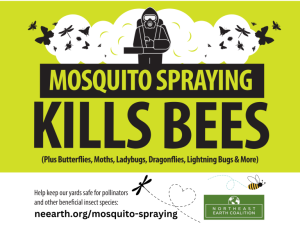
Mosquito Spraying Kills Bees (And Butterflies, Moths, Ladybugs, Dragonflies, Fireflies …)
Spring has arrived, bringing with it a profusion of native flowers: bloodroot, spring beauties, violets, Jacob’s ladder, creeping phlox, foamflowers, and many more provide sustenance for emerging pollinators and pleasure for the human eye.
Something much less welcome also starts popping up in local yards and pubic spaces this time of year: those ubiquitous signs advertising mosquito spraying services. These services have little effect on mosquito populations, which bounce back almost immediately after spraying. They are, however, disastrous for the beneficial insects a healthy ecosystem depends on; bee, butterfly, moth, dragonfly, and firefly populations are decimated, and that damage is long term.
So, what to do about mosquitoes? The first step is to eliminate their breeding sites, which means checking your property for standing water – clean out your gutters, change water in your bird baths regularly, and check flower pot bases for pooling water. For standing water that cannot easily be changed, use mosquito dunk tablets; available at any hardware store, they target mosquito larvae but are harmless to beneficial insects.
Want to be more proactive? Use mosquito dunks to create your own “Mosquito Bucket of Doom.” For instructions for the Bucket of Doom and other tips on dealing with mosquitoes, click on this link: Mosquito-Battling Tactics | The Northeast Earth Coalition
Finally, help us get the word out about the effects of mosquito spraying! Yard signs to counteract “Mosquito Joe” and spread the message are available to order from the NEEC. Click on this link to order your sign: Mosquito Spraying | The Northeast Earth Coalition
Facts about Native Bees
If you ask people what comes to mind when they hear the word “bees,” the first three things are: Honey, Hives, Sting!
These stereotypes are based on the introduced European honeybee. They mostly don’t apply to native North American bees.
So, what about native bee species? Hard to generalize since there are over 400 native species in New Jersey alone, each with its own lifestyle, but here are some native bee facts:
- Some make honey — but never in commercial quantities
- Almost all species are solitary. They nest alone
- Native bumblebees form small collective nests (c.50-200 bees), but not massive hives
- Nest sites vary according to the species, including shallow underground tunnels, hollow plant stems, and holes in wood
- Stings by native bees are extremely rare. Stinging is suicidal for a solitary bee, and bumblebees are docile — you can pet them! (Even non-native honeybees only sting if their hive is threatened. Foraging honeybees don’t sting.)
Perhaps the most important distinction between introduced honeybees and native bee species:
Honeybees are mostly raised as livestock. They are cared for by humans, fed if they lack food, and treated for parasites and diseases.
Native bees are wild creatures fending for themselves and totally dependent on the natural environment they coevolved with. No one treats them for parasites or diseases (often transmitted to them by honeybees), and if they can’t find appropriate food sources they die.
Honeybees are not threatened or endangered as a species, but many native bee species are facing steep declines due to habitat loss and pesticide use. What you do in your own backyard can help either to rescue them or to push them over the brink: replace lawn with native plant species wherever practical and avoid pesticide use.
Montclair History Center Joins Bee City
The Montclair History Center is the latest local organization to join the Montclair Bee City Committee. With their beautiful onsite meadow featuring native plants and their expertise in dealing with the challenges of deer and invasive plants, the History Center is a welcome addition to the growing Bee City initiative.
The other Montclair Bee City Committee members:
- The Northeast Earth Coalition
- Native Plant Society of NJ (Essex County Chapter) Home – The Native Plant Society of New Jersey
- Garden Club of Montclair
- Montclair Community Farms
- Montclair Parks and Recreation Committee
Pease let us know if your organization would like to join the Committee. We will be planning educational events (workshops, garden tours, movies, etc.) related to pollinators and pollinator gardens as well as identifying potential pollinator garden projects in public areas — parks, schools, libraries, houses of worship, and business districts are all potential sites!
Montclair Bee City Kickoff Attracts Crowd
The Pine Street Firehouse meeting space was filled to capacity on March 18 as enthusiastic residents of Montclair and neighboring towns gathered for the Montclair Bee City Kickoff. “Bee City USA” is an initiative of the Xerces Society, a national nonprofit focused on invertebrate research and conservation; Montclair officially joined this movement last fall.
David Wasmuth of the Northeast Earth Coalition (NEEC), the official Montclair Bee City facilitator, shared information about Bee City goals, the ecology of native bees and other key pollinators, NEEC pollinator habitat projects, and steps residents can take to create pollinator habitat in their own yards.
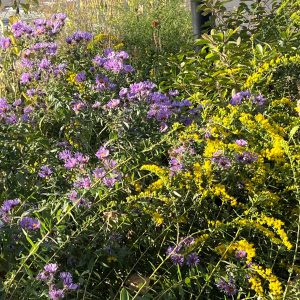
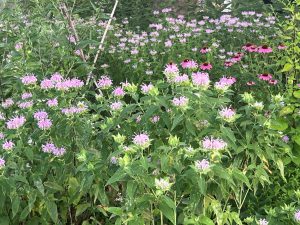
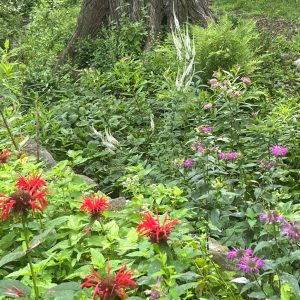
NEEC Projects at Crane Park and the Brookdale Park Overlook.
Bee City Partners Share Their Projects
Wasmuth was joined by representatives of other organizations affiliated with Montclair Bee City. Deb Ellis of the Native Plant Society of NJ (NPSNJ) shared slides and information about the beautiful native plant meadow that the NPSNJ, along with the Essex County Master Gardeners, maintains at Eagle Rock.
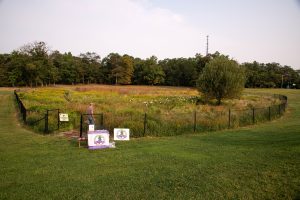
The NPSNJ Meadow at Eagle Rock
Violet Agoos of Montclair Community Farms pointed out how MCF includes pollinator habitat alongside their vegetable gardens. Violet also mentioned how MCF benefits from the beautiful pollinator meadow installed and maintained by the adjoining Montclair History Center. Karen Fricke of the Garden Club of Montclair discussed how the Club has transformed the planters along the Church Street sidewalks with beautiful, pollinator-friendly native plants, showing what can be accomplished even in small spaces.
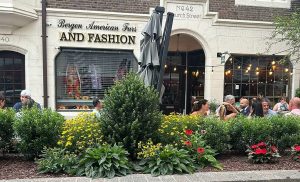
The Garden Club’s Church Street native plant beds
Sarah Paulsen and Drury Thorpe shared an inspiring account of their “Connected Courtyard” pollinator garden project at Watchung School, which gets students out of the classroom and into the garden for active, hands-on lessons ranging from ecology and science to art.
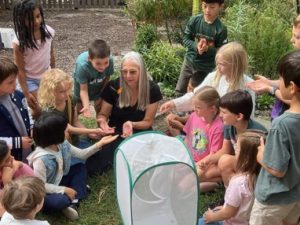
Watchung School Pollinator Garden Classroom
Montclair Sustainability Department Native Plant Initiatives
Dr. Lisa Johnson of Montclair’s Sustainability Department shared exciting information about her department’s initiatives in promoting sustainable landscaping featuring pollinator-friendly native plants. In addition to installing a grant-funded demonstration native plant garden at the Crescent Parking Deck, the Sustainability Department has set up a program with to provide free native landscape consultations to residents. Township residents who incorporate native plants into their home landscapes can also apply for their properties to gain recognitions as “Certified Montclair Native Habitats” – complete with a yard sign stating that the garden is “pesticide-free and planted with native species that sustain pollinators, birds, and a healthy local ecosystem.” For more information, visit: Montclair’s Native Landscapes Project Township of Montclair, NJ
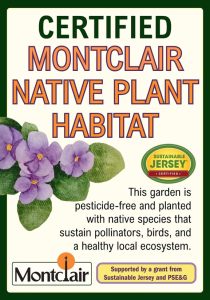
The meeting also included information about the threats to pollinators and other beneficial insects from home pesticide use, especially mosquito spraying.
Participants left the event with an enhanced understanding of the Bee City initiative, appreciation of the ongoing pollinator projects in Montclair, and practical ideas about steps they could take to improve pollinator habitat in their own yards by using native plants and reducing pesticide use. They were also given lists of native plant sources and upcoming native plant sale, curtesy of the NPSNJ.
Montclair Bee City USA in the News
“Montclair Bee City Kick-Off” planned Mar. 18 – The Jersey Bee
Montclair Is a Designated ‘Bee City.’ What Does That Actually Mean? – Montclair Girl
Montclair Becomes a Bee City USA Affiliate – Montclair Local
Montclair Passes ‘Bee City USA’ Resolution To Protect Pollinators, Habitats | Montclair, NJ Patch
Native Plants + Native Pollinators = Healthy Habitat
As part of the Montclair Bee City initiative, the NEEC has partnered with two Montclair nonprofits, Montclair Community Farms and Van Vleck House and Gardens, that are offering upcoming plant sales featuring natives. We have made notes on the value to pollinators of each of the native plants included in their sales.
Montclair Community Farms Plant Sale (4/30-5/2) Plant Sale — Montclair Community Farms: Native Plants Offered + Pollinator Value
Asclepias incarnata (Swamp Milkweed): A crucial nectar and pollen source for native bees, butterflies, and hummingbirds and the host plant for Monarch butterflies and 12 other moth or butterfly species.
Lobelia siphilitica (Blue Cardinal Flower): Late-summer nectar and pollen source for bumblebees, specialized long-tongued bees, and hummingbirds. Host for the Pink-Wash Looper Moth.
Monarda didyma (Scarlet Beebalm): Attracts a wide & diverse range of native pollinators, including bumblebees, specialist bees, butterflies, moths, and hummingbirds. Host plant for at least 9 species of moths.
Packera aurea (Golden Groundsel): Vibrant yellow spring flowers are a significant spring pollen and nectar source for bees and butterflies.
Penstemon digitalis (Foxglove Beardtongue): A critical last spring to early summer nectar source for wide range of pollinators, including hummingbirds, butterflies, and native bees (mason, leafcutter, and bumblebees). Host plant for the Chalcedony Midget moth and Chalcedon Checkerspot butterfly.
Polemonium reptans (Jacob’s Ladder): A crucial early-spring food source for native bees, specifically queen bumblebees, mining bees (including the specialist Andrena polemonii), mason bees, and syrphid flies.
Pycnanthemum muticum (Short-toothed Mountain Mint): A 3-year study ranked it the #1 pollinator plant out of 86 species (attracted 4.6 times as many pollinator visits as the next most attractive plant!), supporting a massive diversity of insects, including bees, wasps, flies, and butterflies. It provides a critical, long-lasting nectar source from July to September. Deer & rabbit resistant.
Solidago caesia (Blue-stemmed Goldenrod): Crucial for late-season pollinators, supporting at least 10 specialized bee species, numerous butterflies, and moths. Host plant for 121 moth or butterfly species. Keystone species.
Sporobolus heterolepis (Prairie Dropseed): A critical larval host plant for various moths, butterflies and skippers. Provides nesting sites for native bees.
Symphyotrichum laevis (Smooth Blue Aster): Provides essential late-season nectar and pollen for Monarch butterflies, native bees (including specialists), and syrphid flies from September to late fall. Host for 9 moth or butterfly species, including the Pearl Crescent and Silvery Checkerspot. Keystone species.
Van Vleck Gardens Plant Sale (5/1-5/3) Van Vleck Spring Plant Sale – The Montclair Foundation: Native Plants Offered + Pollinator Value
Amsonia hubrichtii (Threadleaf Blue Star): Critical early-season nectar source for butterflies, hummingbirds, and native bees. Host plant for insects like the Snowberry Clearwing moth.
Agastache foeniculum (Anise Hyssop): Abundant, high-quality nectar and pollen mid-summer through fall. A magnet for native bees, butterflies, moths, and hummingbirds.
Aquilegia canadensis (Wild Columbine): Nectar-rich spring flowers are a magnet for hummingbirds and attract a variety of insects, including bumblebees and butterflies. Host plant for the Columbine duskywing butterfly.
Aronia melanocarpa (Black Chokeberry): Attracts butterflies, and small bees. Berries support birds over the winter.
Aster ericoides (Heath Aster): Profuse late-season blooms that attract a wide variety of bees and butterflies. Especially beneficial for bumblebee queens and migrating Monarchs; supports several specialized bee species.
Baptisia australis (False Blue Indigo): Early season blooms attract bees and butterflies. Host plant for several moth and butterfly species.
Blephilia ciliata (Downy Wood Mint): Attracts a wide variety of butterflies and native bees.
Chelone glabra (White Turtlehead): Primary host plant for the Baltimore Checkerspot butterfly; a critical late summer pollen and nectar source for bumblebees and hummingbirds.
Clethra (Sweet Pepperbush): Critical late-summer nectar and pollen source for bees, butterflies, and hummingbirds, especially attractive to bumblebees and swallowtail butterflies. Host plant for at least 11 moth and butterfly species.
Conoclinium coelestinum (Blue Mistflower): Late-season nectar and pollen source for butterflies, native bees, and moths. Critical fuel source for migrating Monarchs and host for several moth species.
Coreopsis spp: Nectar-rich and pollen-heavy keystone plant for supporting pollinators, including specialized native bees, long-tongued bees, wasps, flies, butterflies (crescent/checkerspots), and beetles. Keystone species
ECHINACEA spp: Nectar and pollen create a summer magnet for bees, butterflies, and hummingbirds, supporting diverse insect communities. Host plants for the Silvery Checkerspot butterfly.
Eutrochium spp: Late season nectar and pollen source for butterflies, bees (including specialist bees), and moths from mid-summer to early fall. Host plant for over 3 dozen species of moths and butterflies. Attracts predatory insects like ladybugs, lacewings, and parasitic wasps, assisting with natural pest control. Keystone species.
Fern Athyrium filix-femina: Host plant for several moth species.
Geranium maculatum (Wild Geranium): Supports early-season native bees (including specialist bees), butterflies, and syrphid flies. Host plant for over 25 moth and butterfly species.
Geum triflorum (Prairie Smoke): Early spring blooms are particularly attractive to bumble bees. Supports additional pollinators, including beetles and wasps.
Heliopsis helianthoides (False Sunflower): Vibrant flowers and abundant nectar attract be, butterflies, and other pollinators, including specialist bees.
Lonicera sempervirens (Coral Honeysuckle): Attracts hummingbirds, butterflies, and bees. Host plant for spring azure butterflies and snowberry clearwing moths
Ilex glabra: A crucial spring nectar source for native bees (including specialist bees), wasps, beetles, and butterflies. Host for Henry’s Elfin butterfly.
Itea spp: Nectar and pollen source from late spring to early summer for a wide range of bees and butterflies.
Lobelia cardinalis (Cardinal Flower): Extremely attractive to hummingbirds as well as swallowtail butterflies, moths, and native bees in mid-to-late summer. Host for 7 butterfly and moth species.
Lobelia puberula (Downy Lobelia): Late summer to fall nectar and pollen source for hummingbirds, butterflies, and native long-tongued bees.
Lobelia siphilitica (Blue Cardinal Flower): Late-summer nectar and pollen source for bumblebees, specialized long-tongued bees, and hummingbirds. Host for the Pink-Wash Looper Moth.
Meehania cordata (Meehan’s Mint): Attracts bees and other pollinators in shaded locations.
Monarda punctata (Spotted Beebalm): Provides special value to native bees, bumblebees and honeybees, and attracts predatory and parasitoid insects that prey on pest insects. Host plant for the gray marvel moth and the snout moth.
Oenothera spp (Evening Primroses): Support nocturnal insects like hawkmoths and sphinx moths, as well as specialist bees. Host plant for the Primrose Moth and the White-Lined Sphinx Moth. Keystone species.
Pachysandra procumbens (Alleghany Spurge): Blooms of this native pachysandra provide early spring pollen and nectar for native pollinators.
Penstemon spp. (Beardtongues): A premier early summer pollen and nectar source for native bees (including specialist bees), hummingbirds, butterflies, and moths.
Phlox divaricata (Wild Blue Phlox): A critical early spring nectar source for bees, butterflies, and hummingbird moths. Host plant for at least 8 moth and butterfly species.
Phlox paniculata (Garden Phlox): Fragrant, tubular flowers attract butterflies, bees, and hummingbirds.
Prunus maritima (Beach Plum): Early-spring nectar and pollen source for native bees, bumblebees, and beneficial flies. Host plant for over 400 butterfly and moth species. Keystone species.
Pycnanthemum flexuosum (Appalachian Mountain Mint): Among the best plants for attracting a wide variety of beneficial insects from July to September, including honeybees, bumblebees, and butterflies. Host plant for the Gray Hairstreak butterfly.
Rudbeckia spp (Black-Eyed Susans): Keystone plants for pollinators, supporting 29 specialist bee species and host for over 17–20 butterfly and moth species. Keystone species.
Schizachyrium scoparium (Little Bluestem): A host plant for various butterfly and moth species, this native grass also provides overwintering habitat for bumblebee queens.
Sisyrinchium ‘Lucerne’ (Blue-Eyed Grass): Spring nectar and pollen source for native bees and beneficial flies.
Spigelia marilandica (Indian Pink): Nectar rich red tubular flowers make it a hummingbird magnet. Supports pollinators in late spring and early summer.
Spirea latifolia (Meadowsweet): Mid-to-late summer nectar and pollen source for native bees, butterflies, and beneficial insects. Host plant for c. 90 moth and butterfly species.
Spirea tomentosa (Steeplebush): Mid-to-late summer nectar and pollen source for native bees, butterflies, and beneficial insects. Host plant for c.90 moth and butterfly species.
Stokesia spp: Nectar and pollen source from May through summer attracting bees, butterflies, hummingbirds, and moths.
Symphyotrichum obl. ‘Raydon’s Favorite’ (Aromatic Aster): Late summer to late fall nectar and pollen source for native bees, butterflies, and other beneficial insects. Provides fuel for pollinators when little else is blooming. Host plant for the Silvery Checkerspot butterfly and various moth species. Keystone species
Verbena hastata (Blue Vervain): Its extensive nectar and pollen products attract bees, butterflies, and moths from mid to late summer.
Veronicastrum virginicum (Culver’s Root): Mid to late summer pollen and nectar are especially attractive to long and short tongued bees, Other pollinators include bumblebees, mason bees, green metallic bees, masked bees, butterflies, moths, and syrphid flies.
Wisteria frutescens ‘Amethyst Falls’: Spring nectar and pollen source for bees, butterflies, and hummingbirds. Host plant for caterpillars, including the Long-Tailed Skipper and Zarucco Duskywing. Excellent alternative to invasive non-native wisterias.
Montclair Becomes a Bee City USA: A Milestone for Biodiversity
By: Jose German-Gomez
On September 9, 2025, Montclair’s commitment to environmental stewardship reached a new height with the passage of the Bee City USA resolution by the Montclair Town Council. This landmark decision, strongly supported by the Northeast Earth Coalition (NEEC), officially affiliates Montclair with the prestigious Xerces Society’s Bee City USA program—a network dedicated to fostering healthy pollinator populations and advancing ecological sustainability in communities nationwide.
The Bee City USA Resolution: Purpose and Vision
The Bee City USA program is recognized for its scientific rigor and its advocacy for pollinator-friendly policies. By joining this program, Montclair pledges to protect vital pollinators—such as bees, butterflies,moths, and other insects—that are fundamental to local and global ecosystems. The resolution sets forth a vision for Montclair to become a leader in promoting biodiversity, fostering native plant landscapes, and supporting community-wide environmental education.
Collaborative Efforts for Sustainable Impact
NEEC is the official facilitating organization for Montclair Bee City and will work with the Department of Sustainability Township of Montclair, NJ to implement the initiative. It is also setting up a committee of community organizations to guide policy, facilitate habitat creation, and help develop educational resources related to Bee City goals. The Native Plant Society of NJ (NPSNJ) (Home – The Native Plant Society of New Jersey), the Garden Club of Montclair, and Montclair Community Farms have so far agreed to be represented on the Bee City Committee along with NEEC and the township’s Parks and Recreation Committee. Other interested organizations are invited to join.
Promoting Biodiversity: A Model for Area Communities
The passage of the Bee City USA resolution is not only a milestone for Montclair; it sets a precedent for other communities in the region. By prioritizing pollinator health and native habitats, Montclair demonstrates how local governments and community organizations can collaborate to promote biodiversity and ecological resilience. The town’s approach—engaging citizens, leveraging expert partnerships, and modeling successful projects—offers a blueprint for neighboring municipalities seeking to enhance their own sustainability initiatives.
Looking Forward
As Montclair begins its journey as a Bee City USA affiliate, the dedication of the NEEC and its partners will be instrumental in achieving lasting change. The resolution marks an important step in safeguarding pollinator populations, restoring natural habitats, and embracing the interconnectedness of suburban life and nature. Through education, engagement, and habitat creation, Montclair is poised to become a beacon of biodiversity—its commitment echoing beyond town borders, inspiring others to join the movement for a healthier planet.
Bee City Partners
These organizations have agreed to work together on the Montclair Bee City Committee to help make Montclair a pollinator-friendly community: